


Sakura Seet
Why are founders going anti-algorithm
BLOCK71
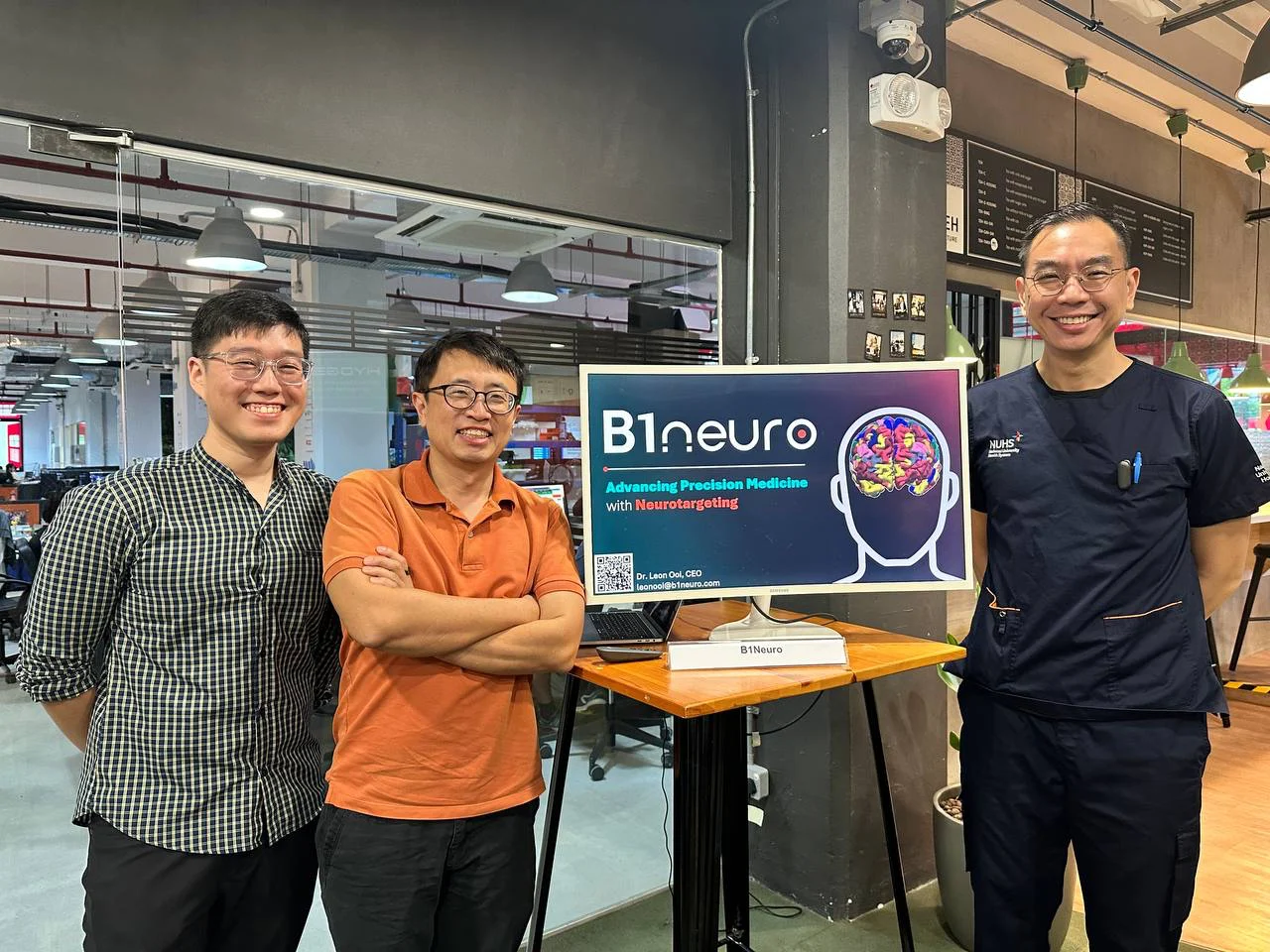
A conversation with Dr Leon Ooi, Co-Founder and Chief Executive Officer, and Dr Ruby Kong, Co-Founder, B1Neuro.
Major Depressive Disorder, commonly known as depression, is the most common psychiatric disorder among adults in Singapore. For individuals experiencing depression, identifying effective treatment options can be challenging. While medications are not universally effective, alternative treatments like Electroconvulsive Therapy (ECT) are often associated with notable side effects.
B1Neuro aims to change that by using brain imaging and stimulation to create personalised, targeted treatments for depression care. Founded by Dr Leon Ooi, Dr Ruby Kong, Associate Professor Thomas Yeo and Dr Tor Phern Chern, this start-up is committed to making mental healthcare more precise and effective.
B1Neuro’s team, made up of clinicians and brain imaging experts, has seen first-hand how patients struggle to find an effective treatment that fits their individual needs and health conditions.
"The journey for patients with depression is long and uncertain, Brain stimulation is a safe and effective treatment, and we want to use our expertise to make it even better.”
Dr Leon Ooi
The multifaceted nature of depression, combined with biological, systemic and psychological barriers, contributes to the challenges in treating this condition effectively.
One factor is the complexity of the human brain. Depression involves complex interactions between neurotransmitters, hormones, and brain regions, making it difficult to pinpoint the ideal treatment for each individual. Approximately one-third of individuals with depression experience treatment-resistant depression (TRD), where standard treatments fail to provide sustained relief.
B1Neuro’s technology, functional MRI (fMRI)-guided transcranial magnetic stimulation (TMS), allows doctors to accurately target areas of the brain linked to depression. Traditional methods rely on scalp-based measurements, which can lead to errors of several centimetres. By using precise imaging, B1Neuro makes treatment far more effective.
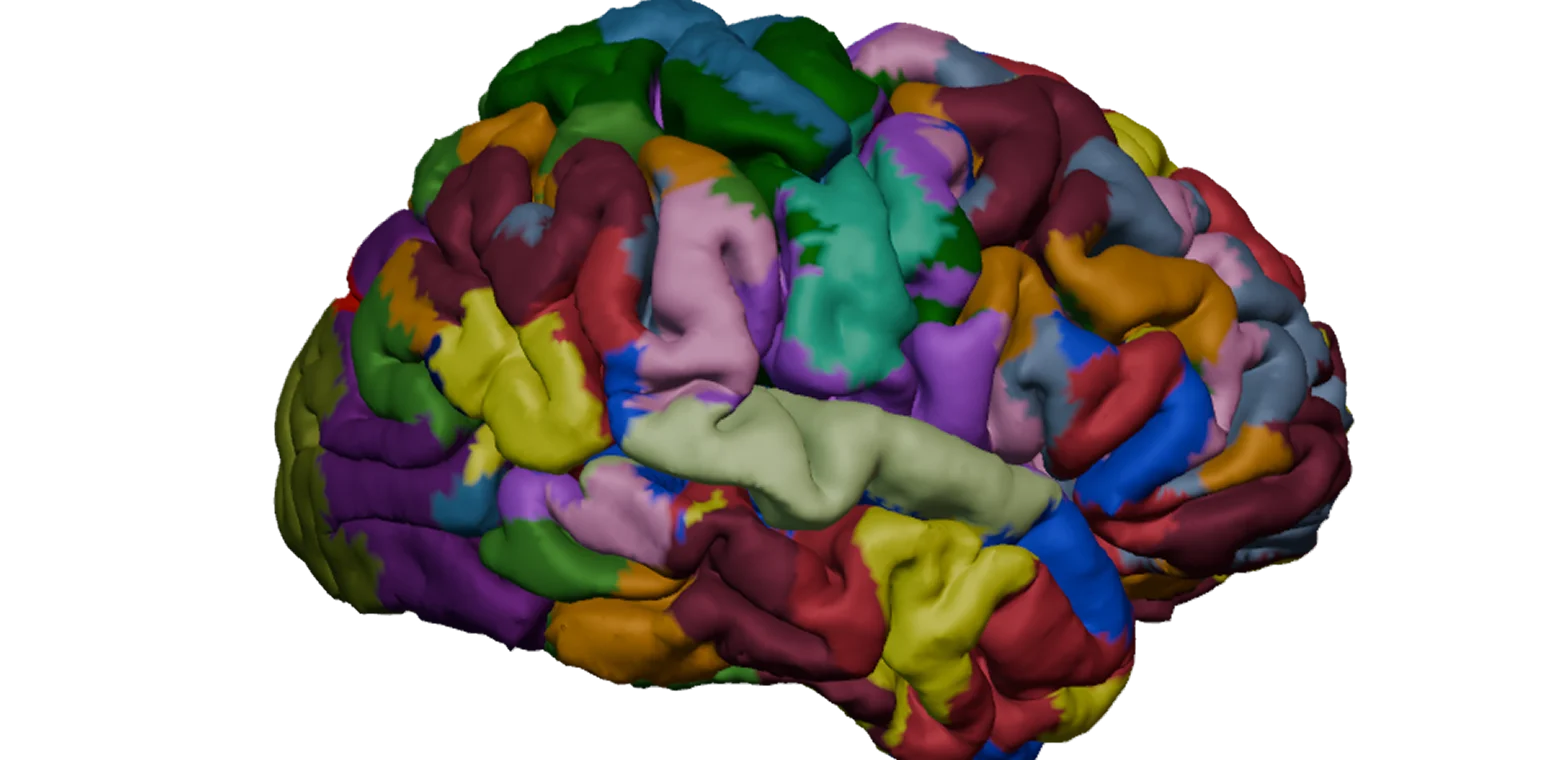
A representation of the functional organisation of Dr Ooi’s brain. Treatments are designed for each individual using their unique brain organisation; each colour represents a different brain network, associated with different functions in the brain.
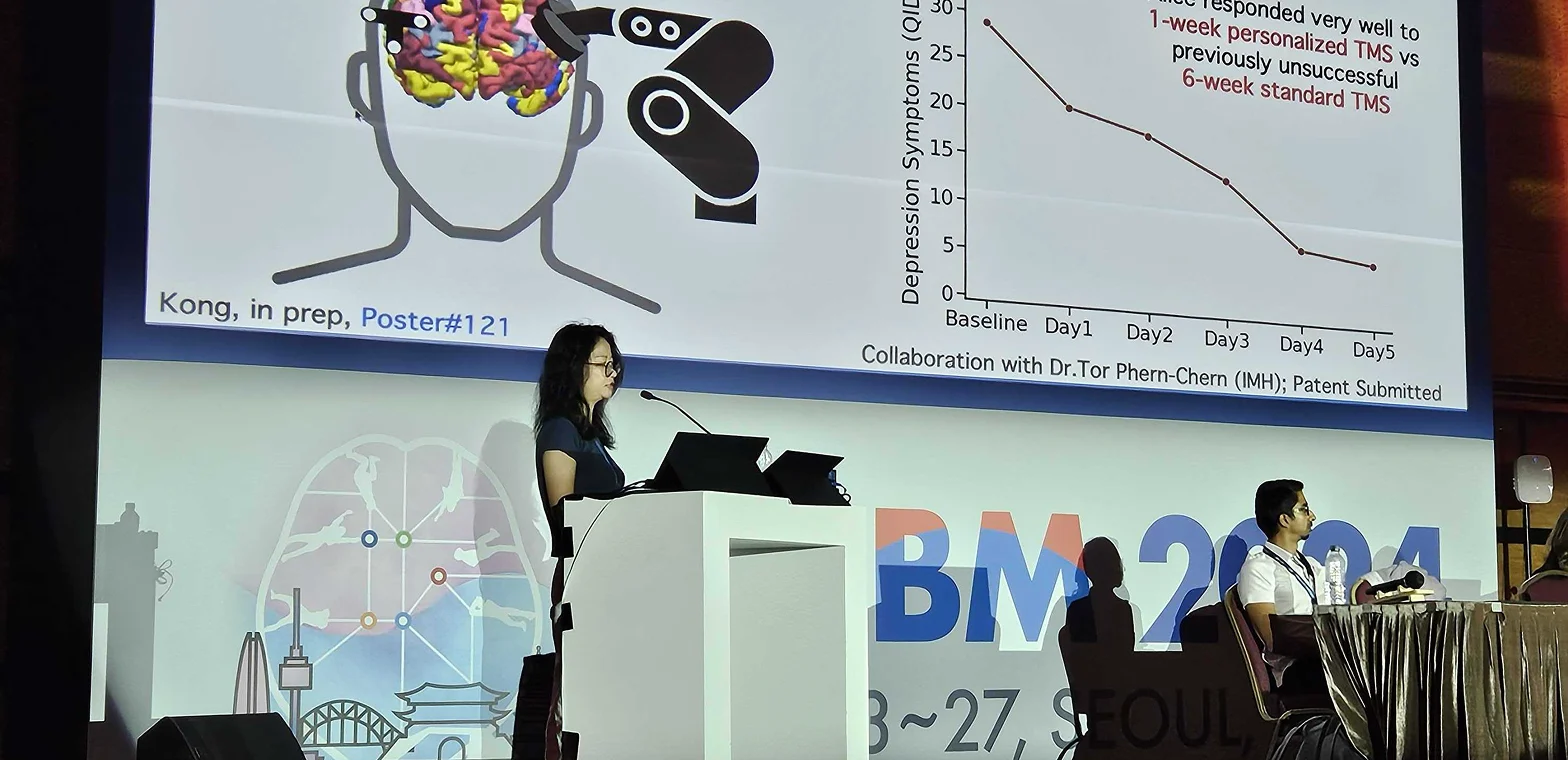
B1Neuro’s approach is already delivering promising results. In a recent study at IMH, standard TMS (using scalp-based measures) had a 21% response rate, but with B1Neuro’s fMRI-guided method, the response rate jumped to around 70%, a game-changing improvement.
“TMS can provide about three months of relief for treatment-resistant depression,” says Dr Kong. “Our precision approach is making it significantly more probable that you respond to the treatment.”
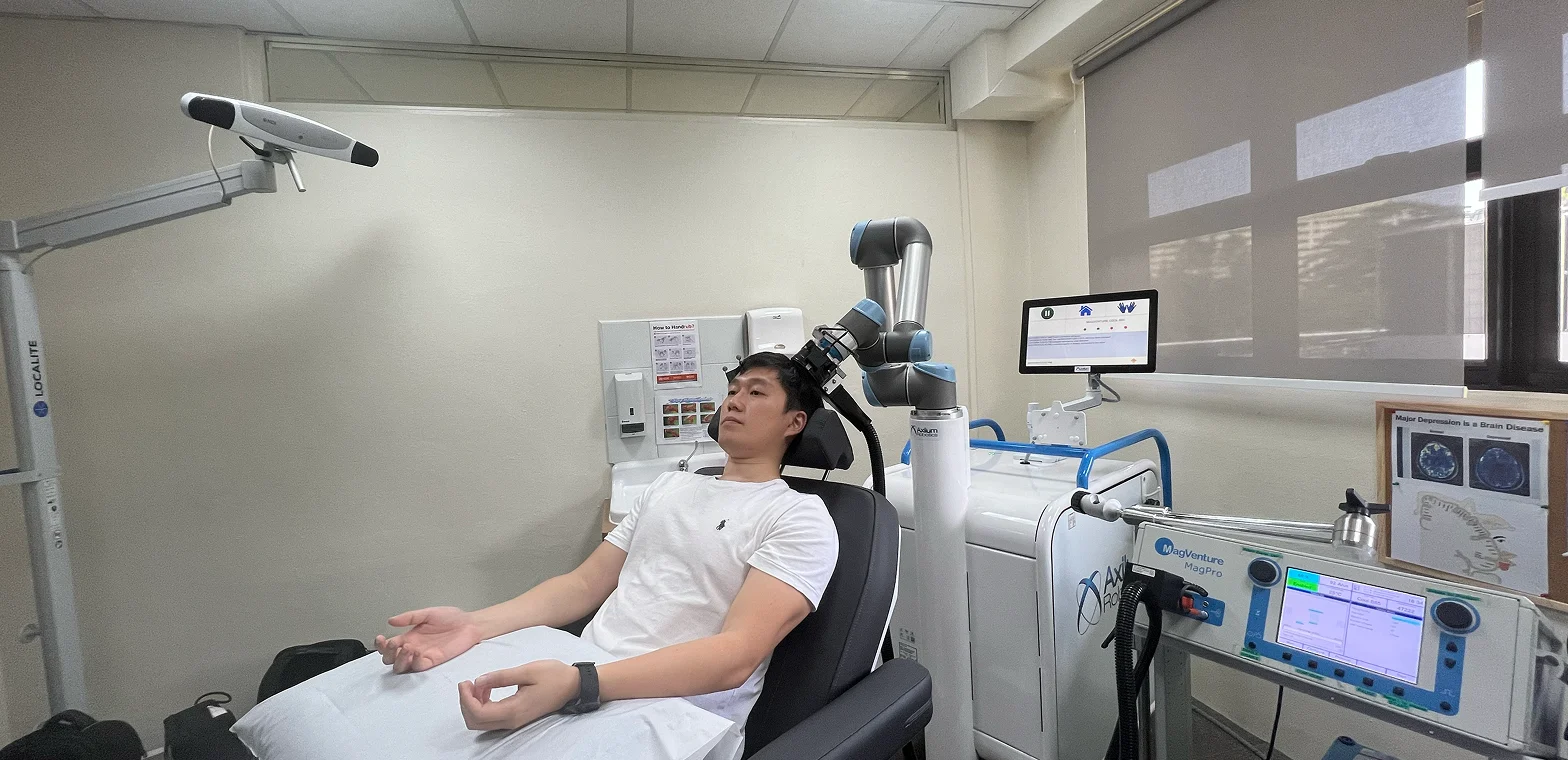
Application of B1Neuro’s technology at the ongoing clinical trial at the Institute of Mental Health. A robotic arm delivers magnetic pulses to a precise location derived using functional MRI images.
Turning research into a real-world solution wasn’t easy. For B1Neuro’s co-founders, shifting from academia to business meant navigating the challenges of funding, regulations, and how to bring a product to market.
NUS Enterprise provided crucial guidance along the way. While filing for their patent, B1Neuro discovered the DeGAP funding programme, which helped them move forward.
“The NUS Technology Transfer and Innovation (TTI) team, Andy Li and Ang Hui Ying, went beyond their role,” says Dr Ooi. “They connected us with experienced entrepreneurs and provided valuable advice.”
Additionally, the NUS Graduate Research Innovation Programme (GRIP) team guided them on their first steps in entrepreneurship, helping them transition from research to business.
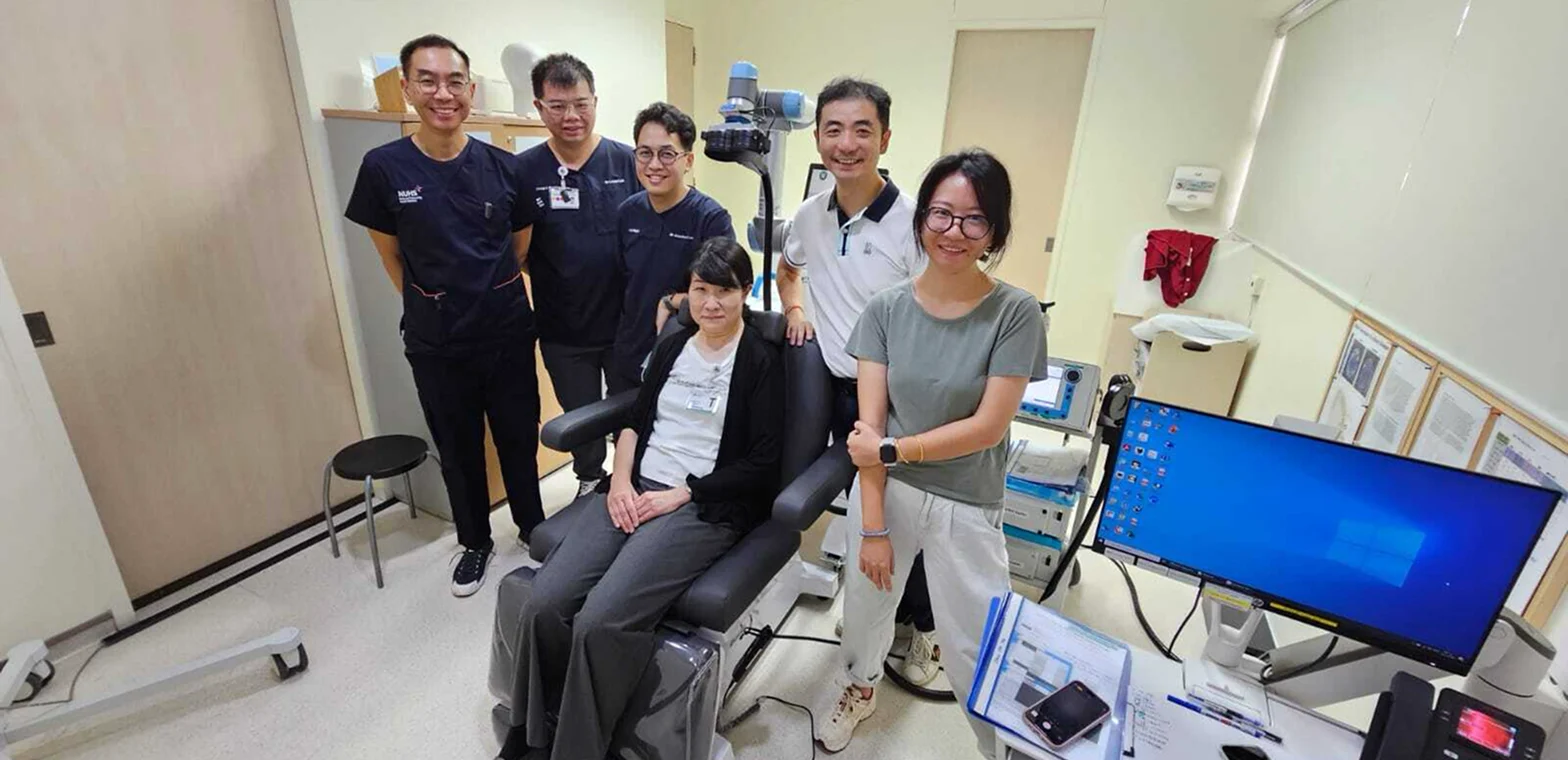
“The healthcare industry is complex,” says Dr Ooi, reflecting on the shift from academia to business. “It’s not just about great research, it has to be practical, scalable, and meet regulatory standards.
What next ? B1Neuro is now expanding beyond depression treatment. Their brain-targeting technology could help with conditions like anxiety, OCD, and Alzheimer’s.
“We’re looking for collaborators to bring our technology from lab to clinic,” says Dr Ooi. “We are also seeking more ways for our technology to reach as many patients as possible.”
With every step, B1Neuro is proving that science doesn’t have to stay in the lab, it can change lives.
Find out more about B1Neuro and sign up for National GRIP.
Prof Thomas Yeo opened the Computational Brain Imaging Group at NUS in 2013, the lab where the mapping method was built.
In 2019 Dr Ruby Kong published an individualised brain mapping method that became one of the most cited in the field.
In 2021 Dr Tor Phern Chern and A/Prof Yeo were able to assess whether neuroimaging improves TMS outcomes in depression.
In 2023 the team entered the hospital with an open-label trial of fMRI-guided depression treatment at the Institute of Mental Health. The success of the trial led to DeGAP funding and presenting at SWITCH in 2025.
2023
Successful open trial at IMH Singapore
1 in 3
Patients resist standard treatment
10 mins
Scan to map one brain
Sakura Seet
Why are founders going anti-algorithm
Davidson Chua
Apply these new acquisition rules before they change again
Jean-Paul Valdes
Apply these new acquisition rules before they change again

Auston Quek
Why tech founders are moving their AI solutions into the physical world