





Sakura Seet
Why are founders going anti-algorithm
BLOCK71
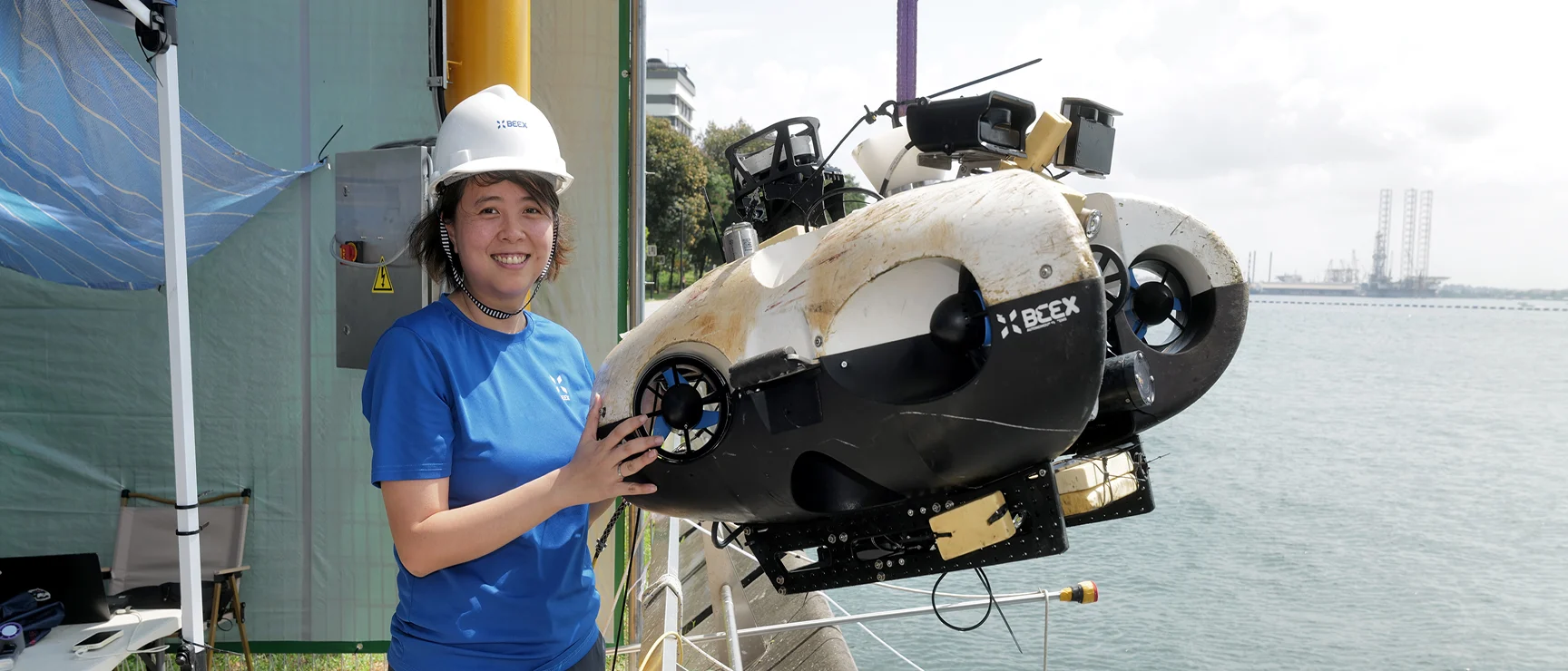
A conversation with Grace Chia, Co-Founder and CEO, BeeX
From the start, Grace Chia’s team had the technology and proof of concept. Their award-winning autonomous underwater drone offered a faster, safer way to inspect subsea assets. Yet, prospective customers remained stubbornly anchored to a legacy system featuring a massive, remotely operated vehicle (ROV) tethered to a mothership housing a full crew, with an onboard specialist to navigate the ROV.
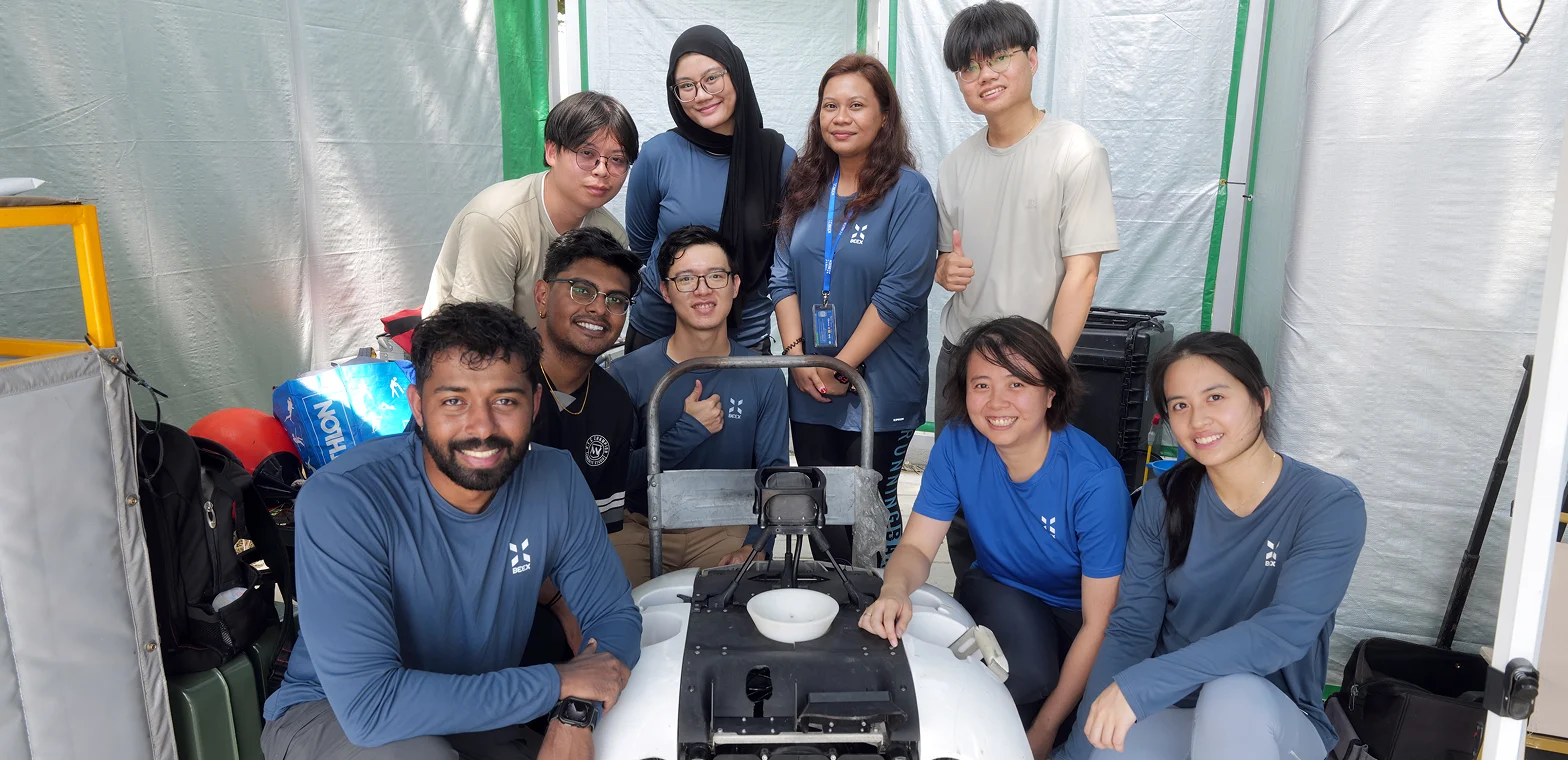
The tide has since turned. In the three years since BeeX operationalised its autonomous underwater drones in 2023, the Singapore-based start-up has completed over 18,000 hours of commercial and defence deployments worldwide. Compared to similar work-class ROVs, BeeX’s drones have reduced operational risk by 90%, and lowered costs by 50%.
The year 2026 marked a step change. In June, BeeX launched BETTA, its most powerful, heavy-duty and intelligent drone to date, powered by 14 years of proprietary data and a multi-sensor perception suite that support rapid decision-making capabilities around highly complex offshore infrastructure and fierce waves.
“We founded BeeX with the goal to not only introduce autonomy to underwater depths but to transform underwater capabilities at scale, BETTA’s intelligence unlocks maximum productivity, especially when multiple drones can independently inspect various structures in the same mission window.”
Grace Chia
To expand its fleet size and operational reach, BeeX raised US$7.7 million in Series A funding in June 2026.
BeeX has its roots in Bumblebee, a robotics club set up by Grace when she was an undergraduate at the National University of Singapore (NUS). Inspired by her one-year National Overseas College (NOC) start-up stint in Beijing in 2011, she ran Bumblebee with a “corporate-like culture”, including pitching to external sponsors for project funding. It was at the club that she met Goh Eng Wei, who would go on to become BeeX Co-Founder and Chief Technical Officer.
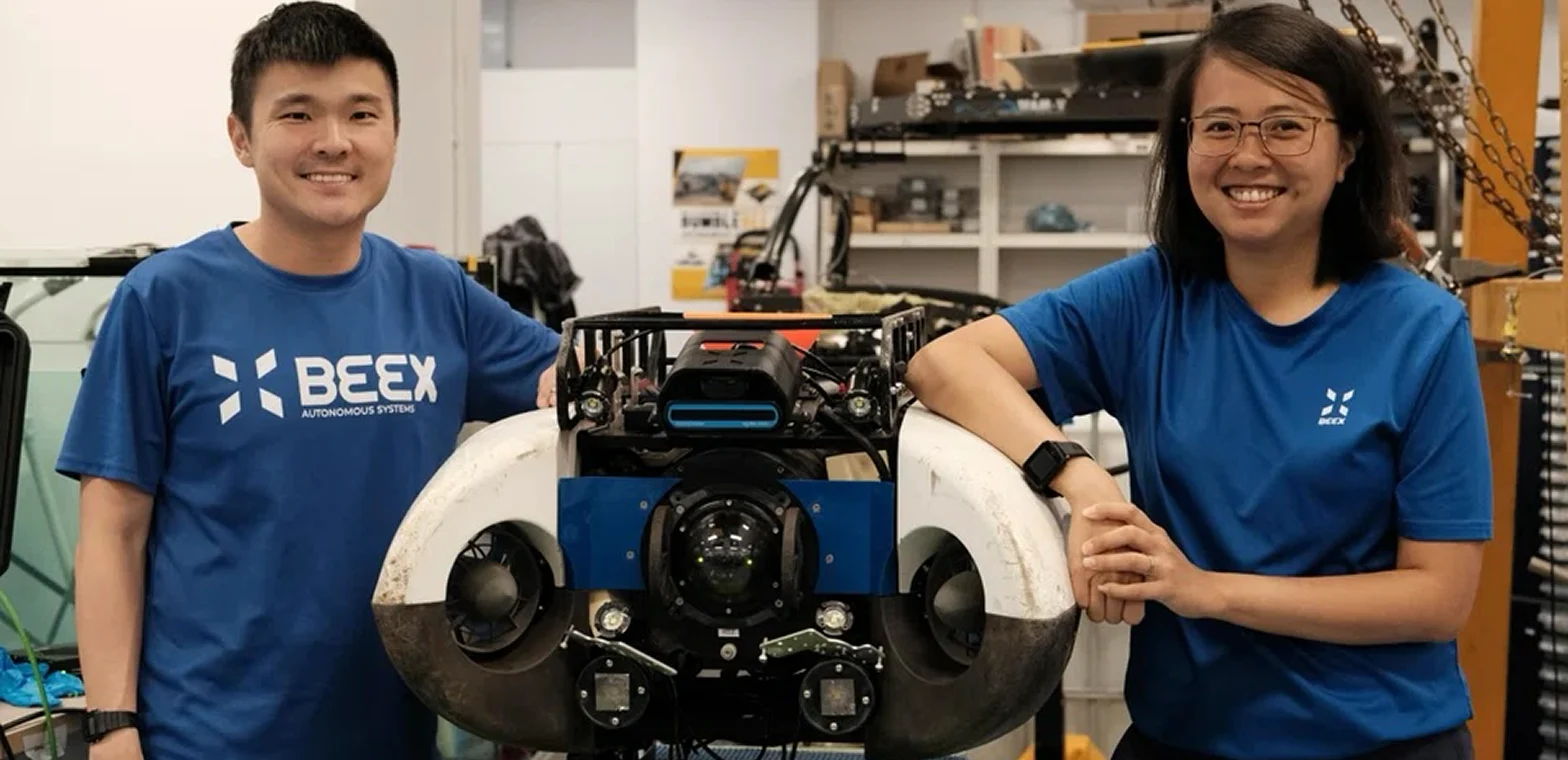
In 2013, the Bumblebee team won the Best New Entry award in RoboSub, an international maritime robotics competition in the US. Although the win validated their vision, the timing was not right. “The technology was too nascent, and the market was unknown,” Grace states.
The co-founders joined the workforce after graduation. She worked in business development for a large subsea technology company, and Eng Wei did research for the public defence sector.
Recalling the impetus to commercialise their innovation in 2018, Grace points to “cumulative frustration” and timing as the key factors. Her job, ironically, involved selling BeeX’s current-competitor ROV systems, or “dumb robots” that needed people to control them. “They were very inefficient and costly to deploy, requiring an expensive mothership and crews of more than 40 people to operate, but the industry was most familiar with this type of technology.”
Turning research into a real-world solution wasn’t easy. For B1Neuro’s co-founders, shifting from academia to business meant navigating the challenges of funding, regulations, and how to bring a product to market.
NUS Enterprise provided crucial guidance along the way. While filing for their patent, B1Neuro discovered the DeGAP funding programme, which helped them move forward.
“The NUS Technology Transfer and Innovation (TTI) team, Andy Li and Ang Hui Ying, went beyond their role,” says Dr Ooi. “They connected us with experienced entrepreneurs and provided valuable advice.”
Additionally, the NUS Graduate Research Innovation Programme (GRIP) team guided them on their first steps in entrepreneurship, helping them transition from research to business.
Meanwhile, her autonomous underwater drone remained an academic project.
Grace later realised that the key to address the inefficiencies in the underwater industry was to “build a new product, operationalise it, and have it independent of resources needed by ROVs”.
With understanding of what autonomous drones could do for the various sectors in energy and defence, Grace and Eng Wei co-founded BeeX in 2018.
The timing was strategic, and serendipitous. Their technology attracted deep interest from a customer from the oil and gas industry. Meanwhile, NUS Enterprise had just launched NUS GRIP, an incubator programme designed to help start-ups translate research into market advantage; and PIER71, a port ecosystem for maritime and maritime-related innovation.
The immediate access to a wide array of resources – from mentors and networks to funds and infrastructure – gave BeeX a boost in its endeavours. The company licensed its technology through NUS GRIP, and has continued to tap on the PIER71 ecosystem as it evolves.
It is a myth that start-ups require a lot of money before they can attain commercial viability. Operating with strict financial discipline, BeeX funded its growth through grants, prize monies, personal funds, and seed investments. “Enterprise Singapore is our biggest grant giver,” discloses Grace. “We also raised over S$1 million in 2022 and S$2 million in 2024 from investors including Cap Vista, Earth Venture Capital, and ShipsFocus Ventures”.
BeeX, unlike many deep-tech start-ups, does not burn capital on pure research. Instead, its biggest outlay goes toward deploying its drones and engineers overseas to demonstrate their capabilities. These “pre-qualifiers” determine their eligibility to submit a tender and introduce their innovation. “It is time, not money, that buys us the progress we need.”
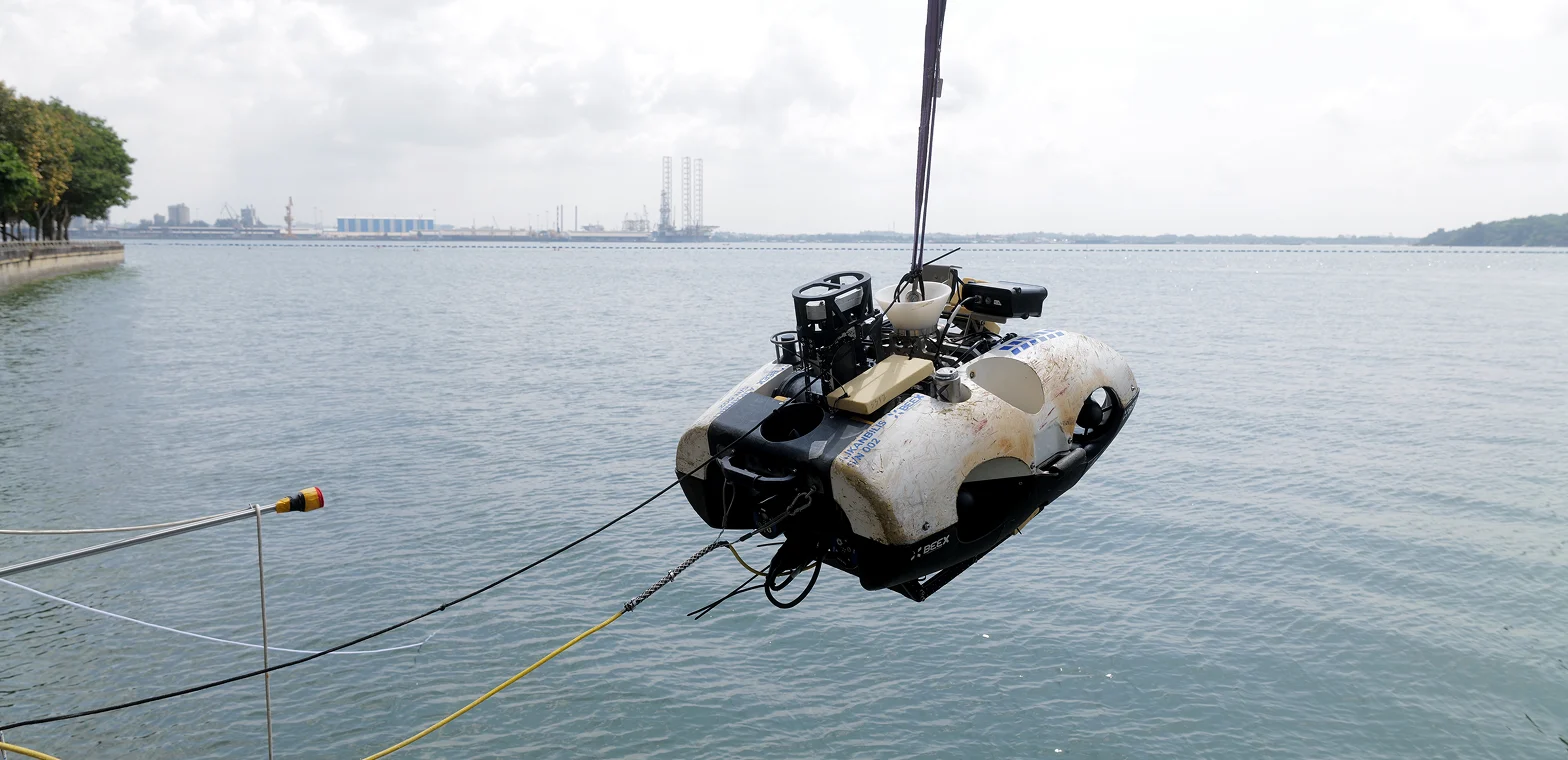
The start-up has operated profitably as a consultancy from 2018 to 2020, and now through contracts with commercial and defence clients.
“Defense was a market we recently expanded to. On the same principle, we are exploring the use of self-driving robots that can do the ‘dangerous’ and ‘inefficient’ work while keeping people safe,” she shares.
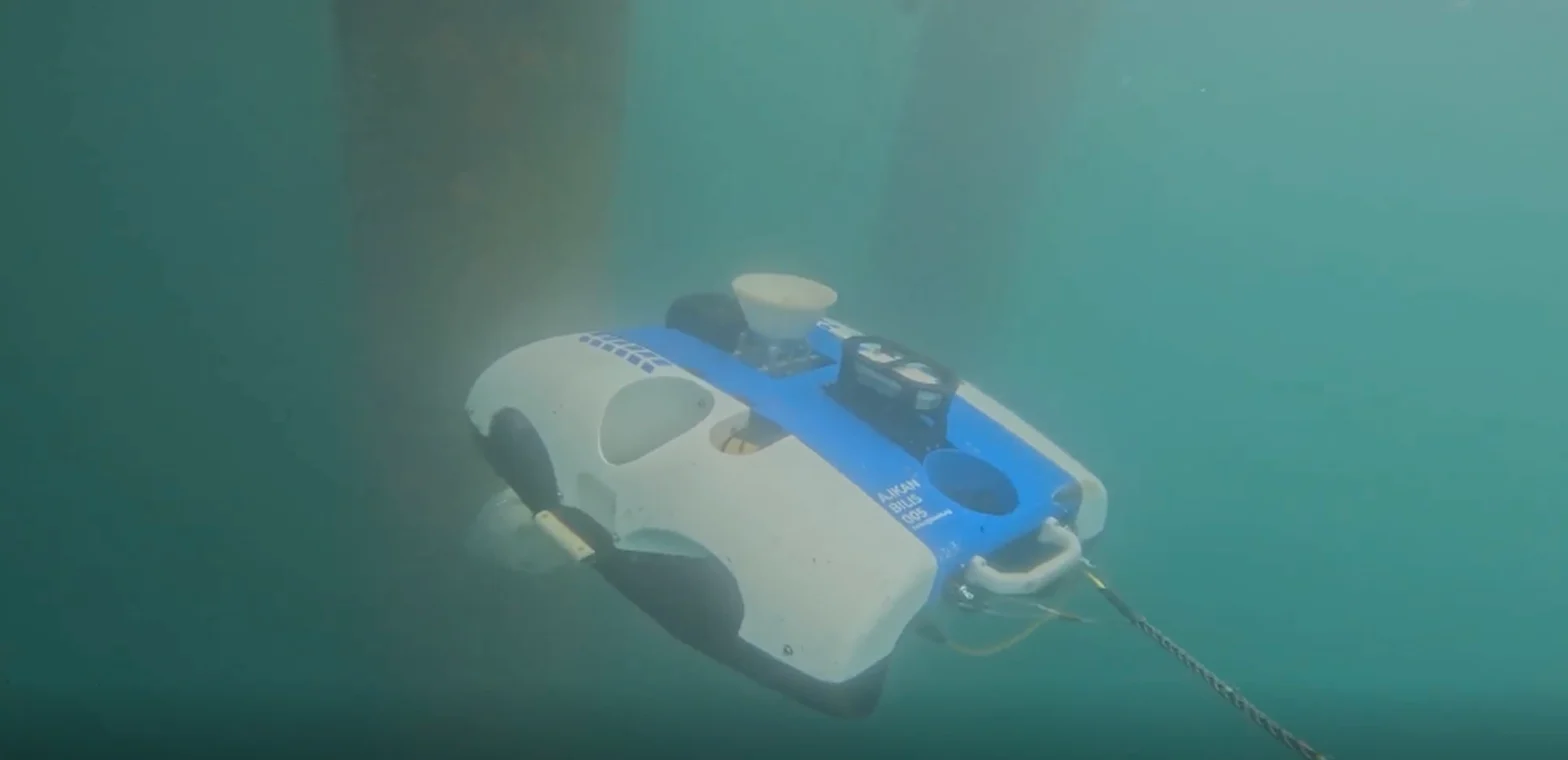
“Singapore’s waters provide a unique advantage to build autonomous behaviours,” notes the entrepreneur. “With low visibility and high turbidity, these challenges have pushed our engineering and software teams to develop smarter operating systems for our autonomous drones. Additionally, our coastline and coastal infrastructures are ideal for product iterations.” This was how BeeX developed its competencies as they continuously deploy their systems travel from land to coastal zones 30 kilometres way, and then to deep oceans more than 200 kilometres offshore.
“Customers are particularly interested in knowing how this progression from manual to autonomous technology can help them reduce their costs,” she explains.
BeeX’s track record, particularly in the energy and defence sectors, has silenced the sceptics. With “significant interest from multiple customers at the same time”, the timing was right to take on Series A capital, says the CEO. Part of the funds will be used to scale its fleet three-fold – to 21 drones in a year – to accelerate capability to serve its customers worldwide.
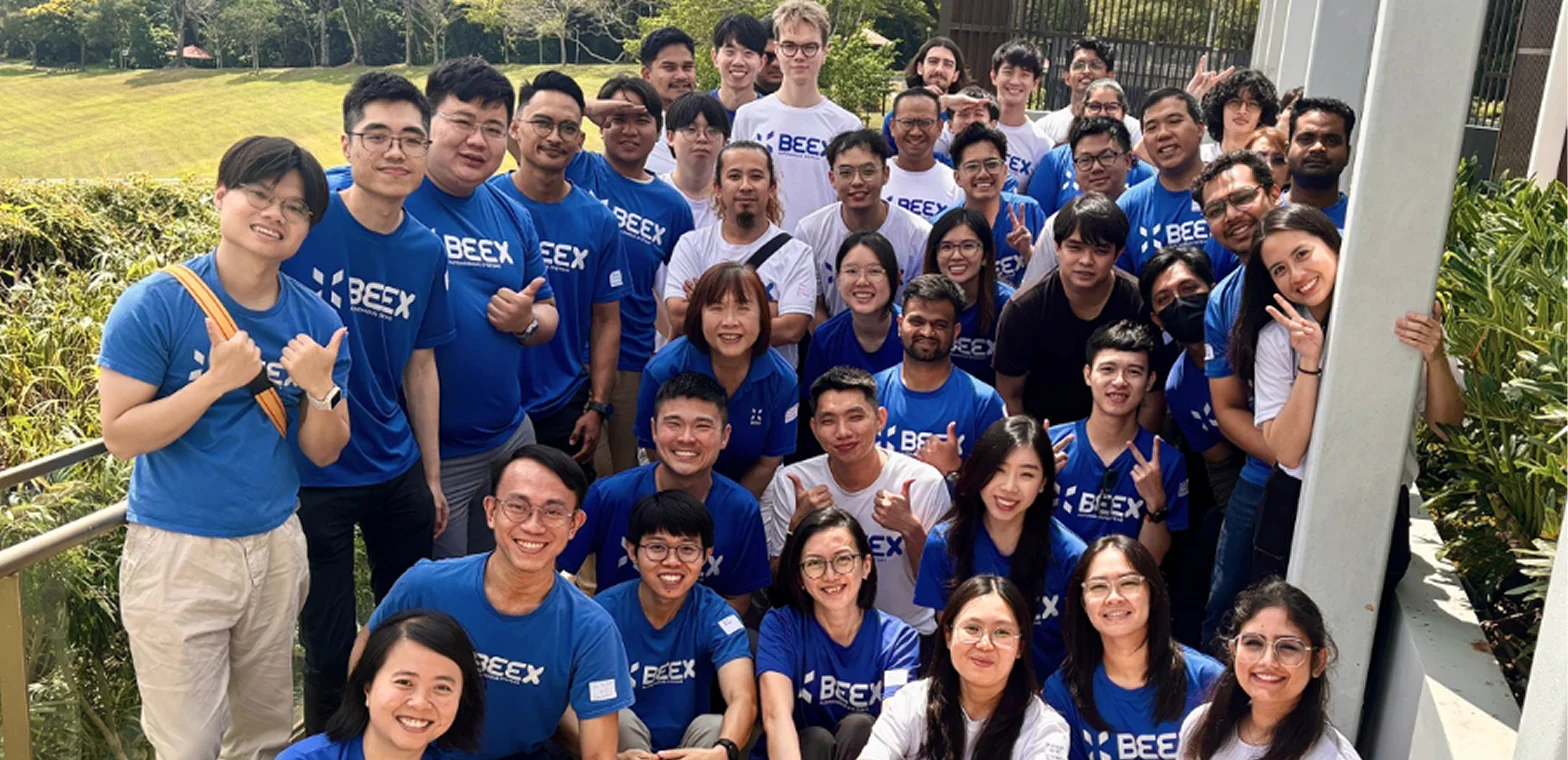
“We have been building and iterating for quite some time, preparing for this scaling-up moment,” Grace reveals. With sufficient inventory to build the desired volume, BeeX further intends to tap into more regional markets, serving clients across the globe.
"Don't mistake interest for passion." Passion, for Grace, is how much you are willing to suffer for the impact you want.
"Be very clear about how you want to structure the relationship with your co-founders." Misaligned expectations break partnerships. Debate the vision early and often.
The companies she looked up to were headquartered in the UK or US, not Singapore. She wants more engineers here to build products and commercialise them. I think Singapore has a good environment (for innovation), and we should try to leverage on this to continue building. I hope to see more engineers actually build products and find ways to commercialise their products.”
“Singapore needs thousands more deep-tech failures. I am not seeing failures often enough; people are not building, failing, learning and coming back.”
2026
Series A · Round led by Monk’s Hill
Full fleet
Operationalised full fleet
BETTA
Launched Gen 2 Drone in 2026
Sakura Seet
Why are founders going anti-algorithm

Davidson Chua
Apply these new acquisition rules before they change again

Jean-Paul Valdes
Apply these new acquisition rules before they change again

Auston Quek
Why tech founders are moving their AI solutions into the physical world