





Sakura Seet
Why are founders going anti-algorithm
BLOCK71
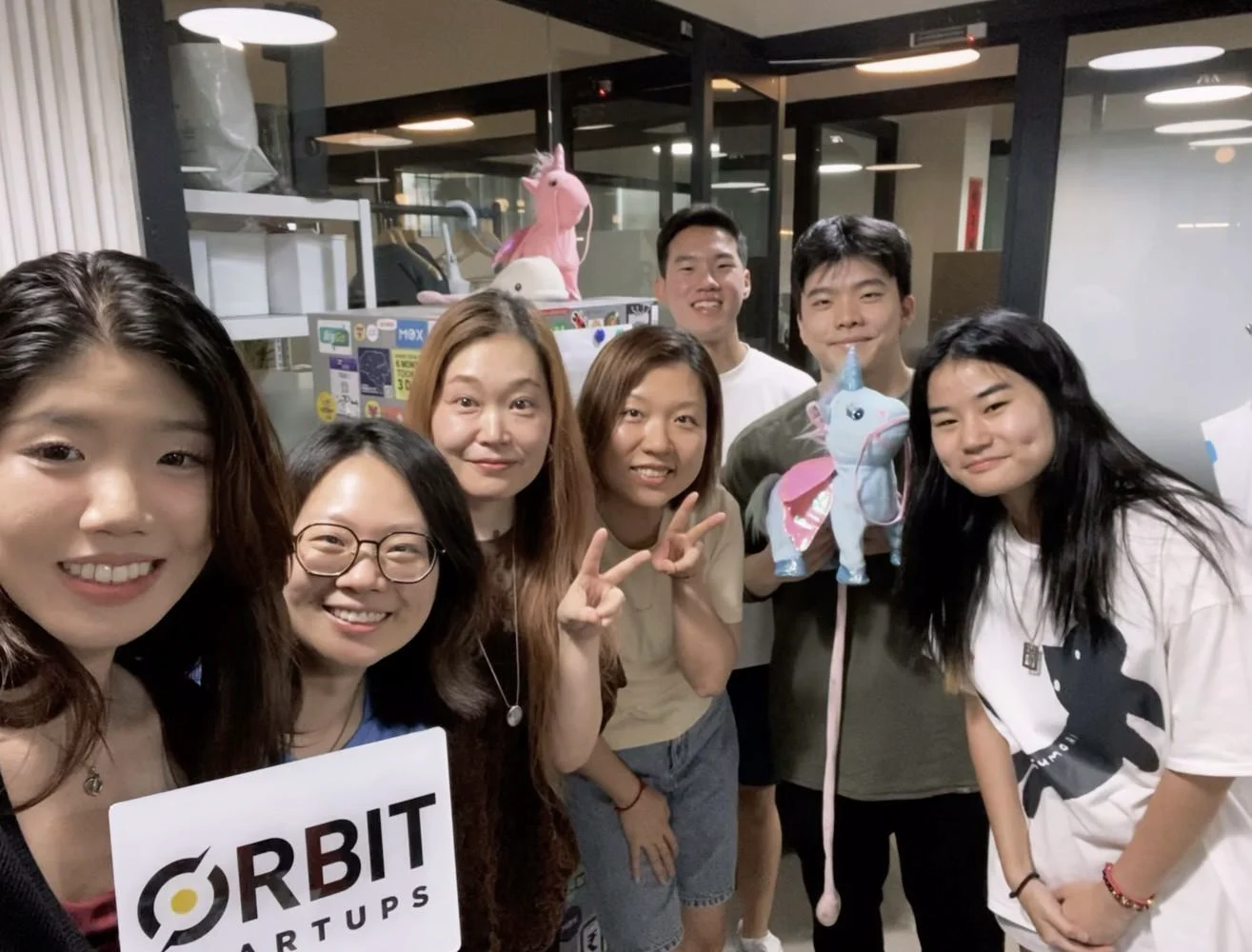
A year with Joy Li, NOC Shanghai Jul ’23, inside Orbit Startups and one of China’s most connected digital cities.
Joy Li did not arrive at NOC with a stack of startup internships or a company of her own. She arrived with curiosity: how does an idea become something people will use, fund and build around? That question was enough to make her apply.
Shanghai was her first choice. The city offered two things she wanted at once: a large, fast-moving market and direct access to founders, investors and operators. For Joy, who had once been accepted to Shanghai Jiao Tong University before choosing NUS, the year also reopened a path she had not taken — this time through Fudan University and a full-time role in venture capital.
“I didn’t have a background in starting my own business. What I had was a deep passion for entrepreneurship and a curiosity about what it takes to build something from the ground up.”
Joy Li

The learning did not stop at the office. Shanghai’s digital infrastructure made technology feel less like a sector and more like a layer across daily life. Payments ran through WeChat Pay and Alipay. Meituan handled fast, low-cost food delivery. Dianping connected reviews and discounts across restaurants and services. Hema brought groceries to the doorstep. Even ordering food to a high-speed train seat became part of the experience.
For Joy, these were not just conveniences. They showed what technological integration looks like when products, platforms, logistics and consumer habits reinforce one another. That observation stayed with her: what would it take for other markets to reach the same level of connectedness?
She tested that question against the wider startup scene too — at S-Tron Shanghai, German Startup Night, MWC Shanghai 2024, NOC Startup Night and a visit to Google Shanghai. Each event added another set of founders, technologies and business models to the picture.
NOC Shanghai also changed Joy’s map of China. With friends from the NOC community, she travelled beyond Shanghai to cities including Beijing, Chongqing, Harbin, Chengdu, Dali, Hangzhou, Qingdao and Guangzhou. The trips made the scale and variation of the market tangible in a way a classroom could not.
Back in Shanghai, adaptation was comparatively quick. Joy worked in English, spoke Chinese fluently and found the city’s transport and routines familiar enough to settle into. She built habits around work, study and the gym — small structures that kept a year of constant movement manageable.
At Fudan University, Joy studied product design in entrepreneurship. At Orbit, she saw venture capital and communications from the inside. Across the NOC programme, entrepreneurship-related activities and pitch mentoring forced her to practise rather than only discuss the work.
The combination sharpened her critical thinking, decision-making and communication. More importantly, it changed the unit of learning. A concept was no longer complete when she understood it; it was complete when she could use it in a meeting, a project, a pitch or a piece of communication that other people had to act on.
“Step into global markets. The experience broadens how you understand the world — and what you think is possible in your own career.”
Joy Li
Joy went to Shanghai asking what it takes to build something from the ground up. She returned with a more operational answer: get close to the people doing the work, take responsibility before you feel fully ready, and learn from the market in front of you.
That is the point of NOC at its best. The city is not a backdrop. The internship is not a line on a résumé. Together, they become the classroom.
Joy applied without the conventional startup résumé. Research the programme, prepare seriously, then put yourself in the running.
A year overseas moves quickly. Stable habits around work, health and learning create the consistency that lets you take on more.
Mentors, managers, founders and peers can teach what coursework cannot. Ask questions, follow up and make time for the conversations around the work.
Notice how people pay, travel, order, build and sell. The operating details of a city can teach as much about entrepreneurship as a formal case study.
Sakura Seet
Why are founders going anti-algorithm
Davidson Chua
Apply these new acquisition rules before they change again
Jean-Paul Valdes
Apply these new acquisition rules before they change again

Auston Quek
Why tech founders are moving their AI solutions into the physical world