



Sakura Seet
Why are founders going anti-algorithm
BLOCK71
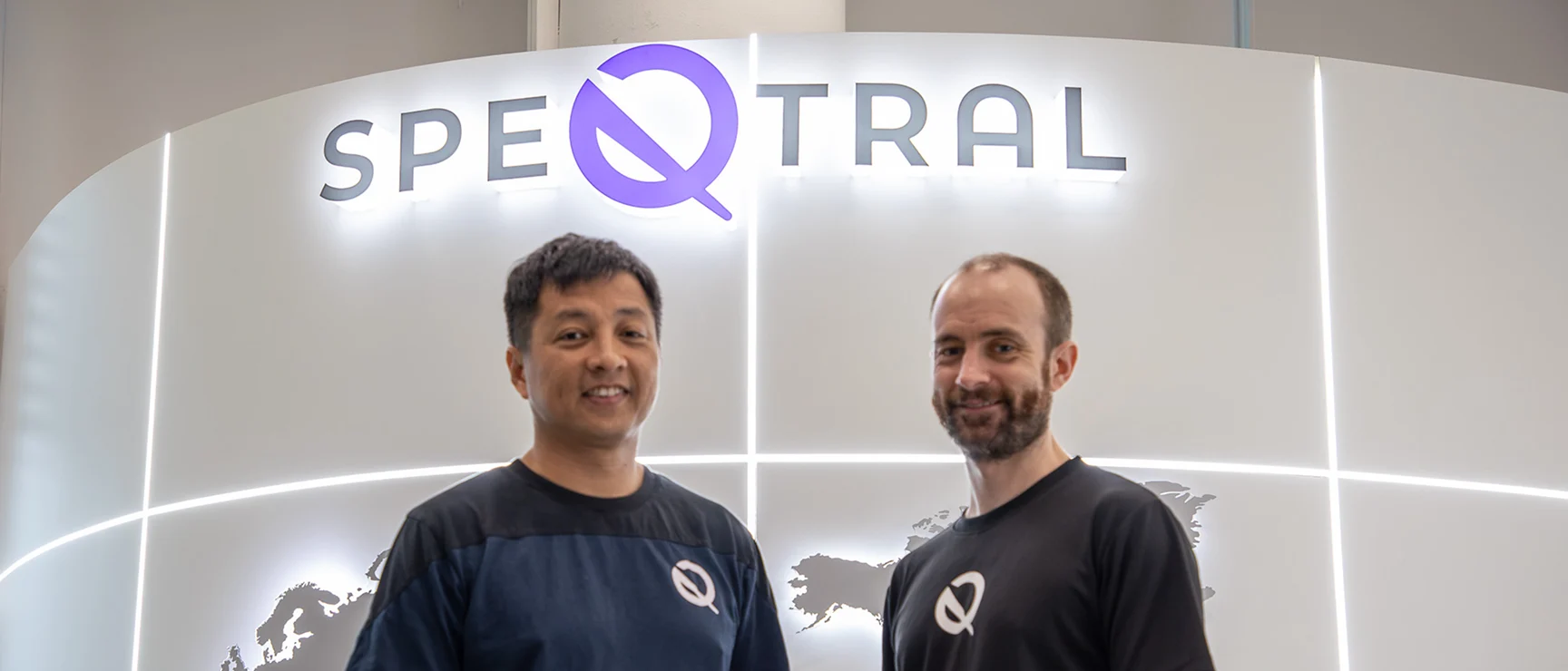
A conversation with Lum Chune Yang, Co-founder of SpeQtral.
Quantum computers were expected to be decades away from breaking today’s encryption. Now credible experts now put that timeline at 2028 to 2033. Chune Yang has spent the past nine years building for it.
“My background is in physics,” he explains when introducing himself. His foray into quantum communications started in a quantum lab at the National University, in what later became the Centre for Quantum Technologies (CQT), working on Quantum Key Distribution (QKD) back when it had no commercial angle at all.
Chune Yang then moved into satellite telecommunications at SES, on the business development side. “These two tracks, space and quantum, have always stayed with me. I love both fields.”
Around 2015, he reconnected with CQT and an old classmate, Professor Alexander Ling, who had spent two decades running experiments in quantum technology. “Putting quantum and space together, I saw a very interesting angle for a commercial spin-off using CQT’s base technology.” He talked it through with Prof. Ling and senior research fellow Rob Bedington, and that was how SpeQtral started.
For Chune Yang, SpeQtral’s origin story wasn’t incidental at all. It was timing, opportunity and faith.
“It is also worth saying clearly: CQT is the reason SpeQtral exists,” he affirms.
“Singapore took a bet on blue sky quantum research in the early 2000s with no specific commercial outcome in mind. No one expected CQT to spin off multiple companies. But because of that leap of faith, the ecosystem, the talent and the know-how were all in place when the commercial wave arrived. Singapore should keep investing in that kind of research. It is through 'blue sky' research that you get the real technological breakthroughs.”
Lum Chune Yang
Ask Chune Yang what SpeQtral does, and he keeps it simple and straightforward, sharing that the company is now operating across two stages:
Just last year, SpeQtral ran a pilot with the Monetary Authority of Singapore (MAS), DBS, HSBC, OCBC and UOB, and partner SPTel on a QKD trial for the financial sector, co-authoring the Singapore Financial Sector QKD Sandbox Report.
One test in the report shows why this matters: when the team cut the fibre link mid-trial to simulate an outage, the system kept running, drawing on a reserve of pre-generated keys deep enough to last two and a half months without a live connection. For a financial system that can’t afford downtime, that’s a far more concrete answer than a lab demo.
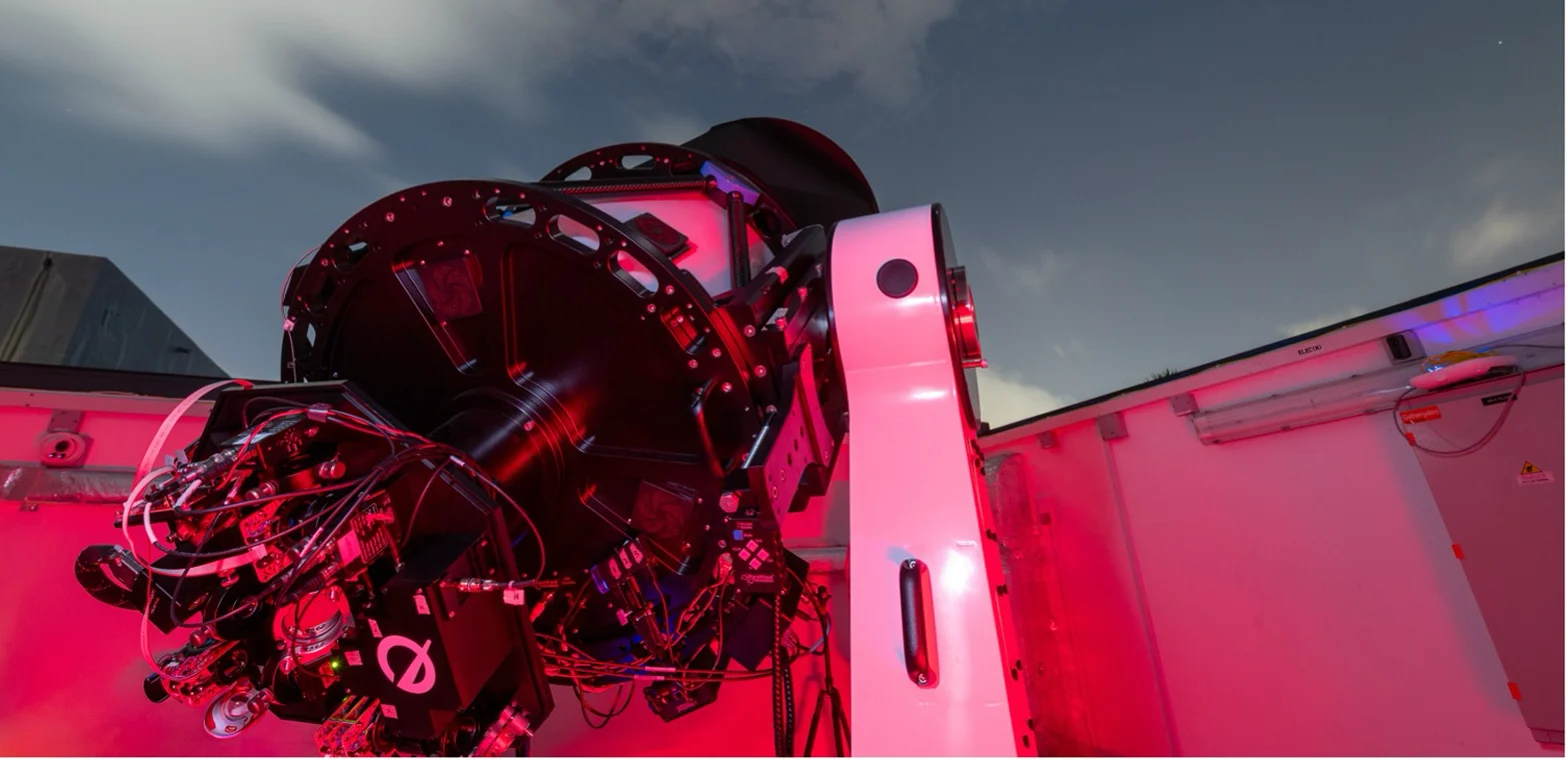
Fibre QKD connects two points already joined by fibre cable, but satellite QKD is trying to do the same thing between two points that aren’t already joined, say, a bank in Singapore and a counterparty in London.
“It’s much more complex than putting two devices in a server room,” Chune Yang explains. The complexity lies in orchestrating across multiple stakeholders — service providers and infrastructure owners and operators — to deliver an end-to-end service, on top of export controls and local installation requirements.
Rather than solving every country’s system alone, SpeQtral has leaned on partnerships, working with SES, HispaSat, and SKY Perfect JSAT, and joining the European Space Agency’s International Use Cases for QKD, to tap into local expertise instead of building everything from scratch every time.
The long-term goal, according to Chune Yang, goes beyond secure communications: eventually connecting quantum computers and sensors too, in what people are beginning to call the quantum internet.
“That is a 20 to 30-year journey, but the work we are doing today will set the foundation to make it possible.”
No amount of business experience prepared him for the sheer volume of rejection from customers, investors, and partners. It's constant, not a phase you graduate out of.
Competitors and sceptics are noise. The real test is whether your original thesis still holds on a 5-, 10-, or 20-year horizon.
Getting matching systems onto two sides of a border is harder than it looks. Partnering with players who already have local reach beats solving each market alone.
No single founder knows everything a deep tech company needs. The job is bringing each specialist's contribution together into a cohesive whole.
~1,000+
Employees globally
12,000+
Customers worldwide
S$300M+
Total raised
2021
Series E · unicorn round
Sakura Seet
Why are founders going anti-algorithm
Davidson Chua
Apply these new acquisition rules before they change again
Jean-Paul Valdes
Apply these new acquisition rules before they change again
Auston Quek
Why tech founders are moving their AI solutions into the physical world