





Sakura Seet
Why are founders going anti-algorithm
BLOCK71
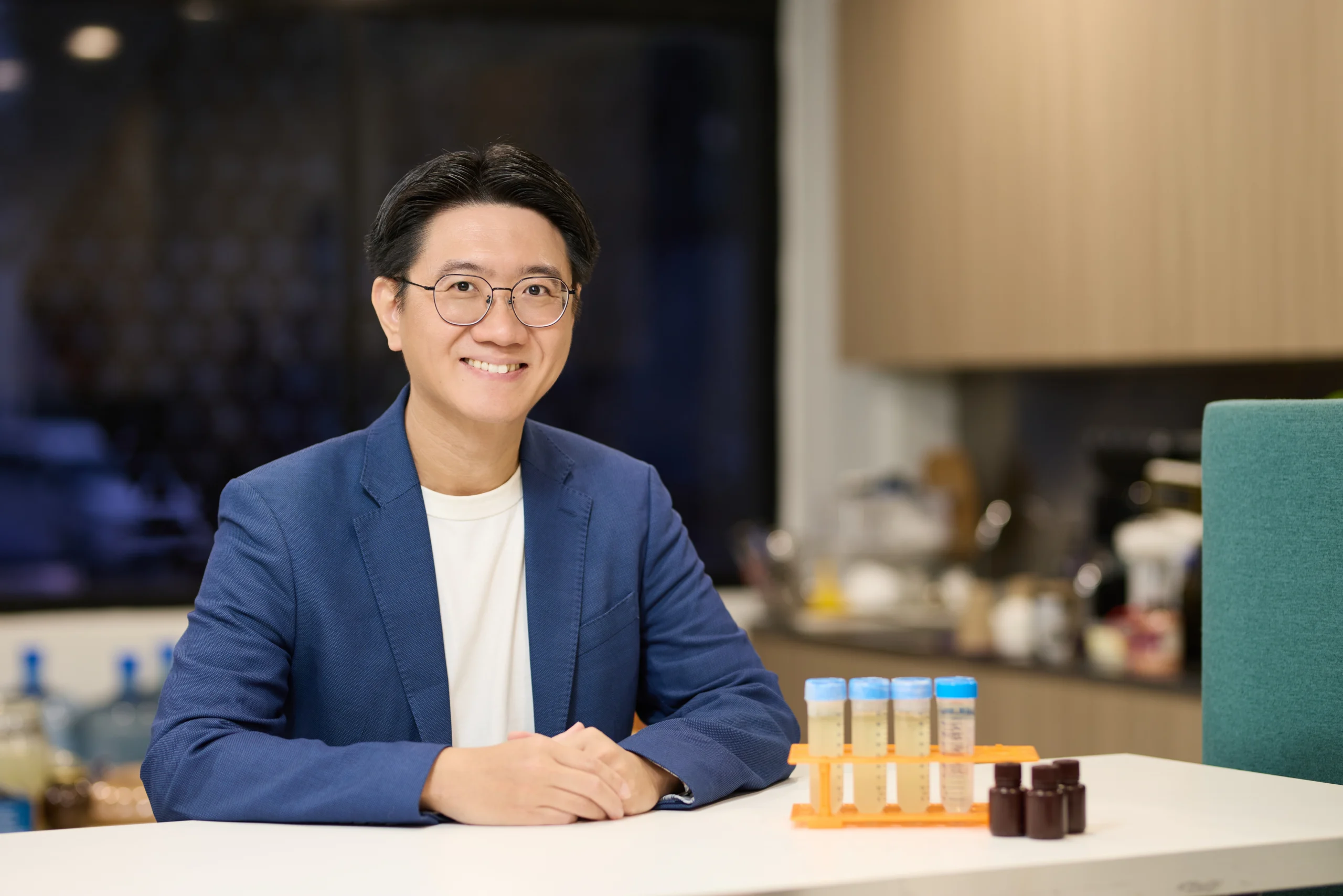
A conversation with Anthony Chua, Co-founder of StratifiCare.
Ever been bitten by a mosquito? Your skin itches, swells, and within a day or two, you’ve forgotten about it. But the bite of an infected mosquito can trigger Dengue fever, and for some, particularly the elderly and those with pre-existing conditions, the disease can turn severe even on a first infection. With four Dengue virus serotypes circulating in Singapore and worldwide, a person can be infected up to four times, and repeat infections carry a higher risk of severe disease.
According to the WHO, Dengue infects 390 million people a year. Half a million of them progress to severe Dengue and need hospitalisation. As global temperatures rise, the population at risk is projected to climb to 63% by 2080.
Singapore has felt a narrower version of this pressure for years: a shortage of hospital beds driven by an ageing population. It was this problem that pulled Anthony Chua in. Back in 2014, while pursuing post-graduate research under his then PhD advisor Mary Ng, he became fascinated with building diagnostic solutions that could help clinicians identify the right care and treatment for patients with arboviral diseases.
That fascination shaped how he thinks about medicine itself.
“I see personalised medicine as a treatment approach that is catered specifically to individual patients, beyond just what the doctor thinks will be good based on experience or general treatment guidelines,” Anthony explains. “Objective data should be derived from the patient himself to inform downstream treatment.”
“I see personalised medicine as a treatment approach that is catered specifically to individual patients, beyond just what the doctor thinks will be good based on experience or general treatment guidelines. Objective data should be derived from the patient himself to inform downstream treatment.”
Anthony Chua
After years of collaborative research, Anthony, Mary, and colleague Tiffany Lin founded StratifiCare to build diagnostic solutions that combine protein diagnostics with artificial intelligence. Today, StratifiCare is an award-winning company recognised by international institutes, corporations, and investors, not bad for a start-up that spun out of a research lab at the NUS Department of Microbiology and Immunology.
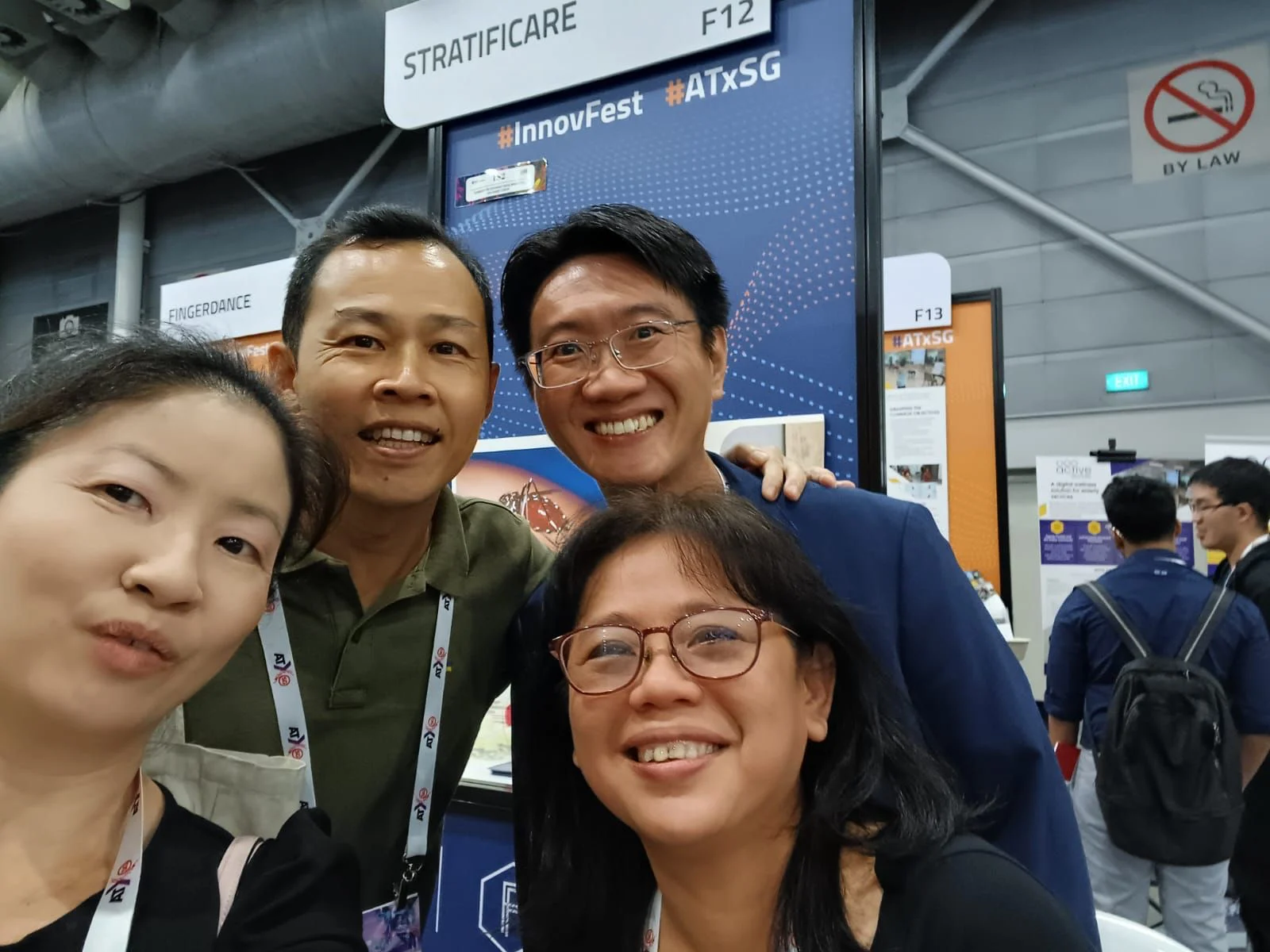
Most Dengue cases are asymptomatic or mild. The real challenge is predicting, early, which patients will develop severe Dengue and need to be hospitalised. Today, patients are admitted if they show one or more warning signs, but most of those hospitalised never go on to develop severe Dengue, an outcome that drives up healthcare costs and strains the system for everyone.
StratifiDen, the team’s severe Dengue prediction test, was built to close that gap. After a patient tests positive for Dengue, their blood sample is analysed for specific proteins.
“By interpreting the protein data with our proprietary AI model, we will be able to predict accurately whether the patient’s condition will deteriorate into more severe forms of Dengue such as Dengue Hemorrhagic Fever, and whether hospitalisation is required,” Anthony shares.
The same underlying approach now powers a second product. StratifiREY, the team’s newest prediction test, forecasts which liver cancer patients will respond well to radioembolization treatment, extending the same personalised, data-first philosophy beyond Dengue.
Anthony’s immediate priority is to bring StratifiDen into Singapore’s hospitals and clinics, with support from DxD Hub, positioning it as a “gold standard” reference model that developing countries can look to. But Dengue poses a far greater threat in countries with less-adequate healthcare infrastructure, and reaching them takes patience, partners, and funding that doesn’t yet exist.
“Stakeholders in developing countries immediately understood the value of StratifiDen,” Anthony says, “because they face Dengue epidemics every year.” He contrasts that with the reception elsewhere: “Stakeholders and investors in developed countries apply their developed-country and COVID-19 perspectives, and feel that point-of-care tests are the next best thing since sliced bread.”
The team has identified potential clinical collaborators in Malaysia, Thailand, the Philippines, and Sri Lanka, but the lack of already-banked patient samples is a real obstacle. Collecting new samples takes years and significant money, which is why Anthony is actively raising catalytic funding, donations, and impact investments to move the work forward.
He’s also thinking ahead to the moment a large-scale epidemic actually hits. “We will need to set up the testing methodology in place during ‘peace time’ such that we do not scramble when a large Dengue epidemic happens.”

Sharing his personal take as a founder in the healthcare industry, Anthony was candid about the structural challenges. “Having a minimum viable product (MVP) is not possible for regulated medical products. There is no access to ‘early stage’ investors who invest only when there is revenue, so you need to find creative ways to survive until then. It helps identify founders who have grit and commitment for the long haul.”
Being based in Singapore adds a second layer of difficulty. “Starting in Singapore, we’re handicapped by our small market. As a Singaporean company, other markets look to how the product performs in our ‘gold standard’ healthcare system, the same effort, cost, and money, for smaller returns. Our healthcare system is almost too good, so patients are less forthcoming about joining clinical trials.”
Anthony’s advice for founders wrestling with the same trade-offs is characteristically direct: “Come talk to me for tips!”
Anthony’s own start-up journey began at NUS. He joined the NUS Overseas Colleges (NOC) programme as an undergraduate and has been plugged into the NUS Enterprise ecosystem since 2006. StratifiCare is now one of seven social enterprise start-ups in the inaugural cohort of the Technology for Sustainable Social Impact (TS2) Start-up Accelerator, a joint initiative by NUS Enterprise and the Singapore Centre for Social Enterprise, raiSE, launched in 2024.
“A special shout-out to Bryan Koh, Ho Yuen Ping and the NUS Innovation to Impact (ITI) team,” Anthony says of the support he’s received over the years.
Dengue may be here to stay, but StratifiCare is closer than ever to easing its toll on patients and healthcare systems worldwide.
Dengue may be here to stay, but StratifiCare is closer than ever to easing its toll on patients and healthcare systems worldwide.
Find out more about StratifiCare and the TS2 accelerator programme.
Sakura Seet
Why are founders going anti-algorithm

Davidson Chua
Apply these new acquisition rules before they change again

Jean-Paul Valdes
Apply these new acquisition rules before they change again

Auston Quek
Why tech founders are moving their AI solutions into the physical world