




Sovereign customer success
Finding buyers is one of the biggest challenges of building in defence. DVL matches teams to operators with verified demand, opening doors into DSTA, DSO, Cap Vista and HTX, as well as key defence primes.

Warfare has been rewritten. The NUS Defence Venture Lab builds Singapore’s national resilience by turning STEM talent into defence entrepreneurs.
Conflict has evolved. Events in Ukraine and the Middle East have ushered in a new era of geopolitics. The last few years proved that high speed, low cost, and high volume systems are more effective than expensive high-tech systems in the battlefield. Militaries across the globe are shifting their strategies to reflect this cost asymmetry, localising their supply chains. At NUS we recognise the importance of this moment. We run the Singapore Defense Tech Hackathon (SDTH), and the strongest teams flow from there into the Defence Venture Lab (DVL). Singapore has tremendous STEM talent. Our goal is to turn that talent into defence entrepreneurs. Founders fluent in both hard engineering and the realities of defence.
Born out of necessity.
The last few years of conflict have reshaped the world. The Defence Venture Lab (DVL) was born to industrialise this paradigm shift. Global markets may not supply what a country’s resilience demands, when it needs it, at the scale it needs. Making sovereign design and manufacturing the only way to fight long economic wars.
Capital markets have realigned themselves to this reality. US venture investment in defence startups went from roughly US$5B in 2015 to roughly US$45B in 2025. An 800% increase in funding. Anduril, Helsing, Saronic, Quantum Systems and Shield AI built serious companies without a commercial hedge.
Most strong teams already have two of the three. DVL completes the set. Academic heavyweights bring deep-tech IP out of NUS and other universities. Tactical engineers iterate quickly on hardware. The strongest teams from the Singapore Defence Tech Hackathon come straight through. No NUS affiliation required, and no citizenship requirement.
Deep skill in AI, robotics, autonomy, aerospace, photonics or embedded systems. Builds faster and smarter than the field.
Obsessed with getting to market, ambitious beyond Singapore, and patient enough to work through government contracting.
Knows what operators in the field actually needs, and can turn an operational gap into a technical requirement.
Finding buyers is one of the biggest challenges of building in defence. DVL matches teams to operators with verified demand, opening doors into DSTA, DSO, Cap Vista and HTX, as well as key defence primes.
Get six months of customer discovery, technical feasibility and commercial viability, run against real requirements. Move from a prototype to a MINDEF or SAF route, and access to leading defence-tech funds.
Build in NUS labs, and access all available resources at NUSX. Test in real conditions, access manufacturing capacity, and work with leading partner Universities as well as venture labs in the US and Europe.
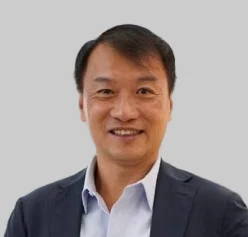
Venture PArtner & Cofounder
Director at Temasek, first in fintech and then in the AI investment team it built in 2019. Made his first defence investments before defence had a venture market. Now building a Halor to ensure operators function at their highest possible level.
Advisor & Strategic Mentor
Head of the Civil Service until 2010, and Permanent Secretary at Defence and at Foreign Affairs before that. Set up the Centre for Strategic Futures, which exists to think about the risks Singapore has not met yet.
No. DVL runs its own selection and there is no NUS affiliation requirement. What counts is the team and what it can build.
No. DVL backs international founders who want to build defence technology from Singapore.
No, but your team needs operator judgement. If nobody on the team has served, that is what the mentor bench supplies.
Through the Singapore Defence Tech Hackathon, or by direct application, case by case. Teams that clear demo day go forward for incubation. The bar is simple: it works, and an operator wants it.
Six months, with the curriculum flexed to what the team needs. You leave with more product, more traction, and a company an investor can price.
No cash fee. DVL puts more than S$100,000 of cash and in-kind support into each incubated team, and takes an equity stake held by NUS and DVL.
No. Founders keep their IP. DVL takes equity in the company, not ownership of the technology.
Yes, and the strongest companies do. Defence pays for the hard physics. The commercial market inherits the moat. Dual use is an expansion path, not a hedge.
ITAR, EAR and SGCA compliance runs through the programme from the start. Export control is one of the most common reasons early defence companies stall.
DVL stays with teams through the first contract, the first institutional round and the first overseas market. Alumni keep access to the network.
Yes. The mentor bench is open to senior operators, technical experts and industry partners.
Bring what you have built, or the operational problem you cannot stop thinking about. DVL takes teams by direct application as well as through the Singapore Defence Tech Hackathon.
[COOKIES]
We use cookies to keep the site working, understand how it is used and improve your experience. Nothing beyond the strictly necessary runs until you choose. Details are in our Cookie Policy.
[COOKIE PREFERENCES]
Choose the categories you consent to. You can change or withdraw your choice at any time from “Cookie settings” in the footer.
Required for the site to work: security, navigation and remembering this choice. They cannot be switched off.
Anonymous statistics on how the site is used, so we can see what works and improve it.
Remember your preferences and enable enhanced features such as embedded media and forms.
Set by our partners to measure campaigns and show relevant content on other sites.